Database & Storage
Database management and storage solutions
6 articles
MySQL vs PostgreSQL vs MongoDB - 2026 Database Comparison
Database selection directly impacts your project's performance, scalability, and maintenance costs. MySQL's ubiquity, PostgreSQL's advanced features, and MongoDB's flexible schema each provide advantages in different scenarios. The wrong choice creates technical debt that requires costly migration i

PostgreSQL Performance Optimization - Index Strategies & Query Tuning
PostgreSQL ships with conservative, general-purpose defaults. Achieving high performance in production requires tuning memory settings, index strategies, query optimization, and maintenance tasks to match your workload. This guide walks through concrete steps from detecting slow queries with EXPLAIN
Redis Cache Layer - Session and Cache Management in Node.js & Laravel
Database queries are the slowest layer of your application. Instead of running a SQL query with disk I/O for every request to frequently accessed data, adding a cache layer that keeps this data in memory drops response times to the millisecond range. Redis has become the standard as an in-memory dat

MongoDB Sharding for Horizontal Scaling - Big Data Architecture
A single MongoDB server is limited by disk capacity, RAM, and CPU. As the data set grows, queries slow down, write operations create bottlenecks, and backup times increase. Sharding eliminates these limits by distributing data across multiple servers (shards). However, a poor shard key choice can ma

Database Backup Automation - pg_dump, mysqldump & Object Storage
Every system without database backups is a potential disaster waiting to happen. A disk failure, an accidental DROP TABLE command, or a ransomware attack can wipe out years of data in minutes. Manual backups get forgotten, skipped, or end up inconsistent. This guide covers creating automated backup
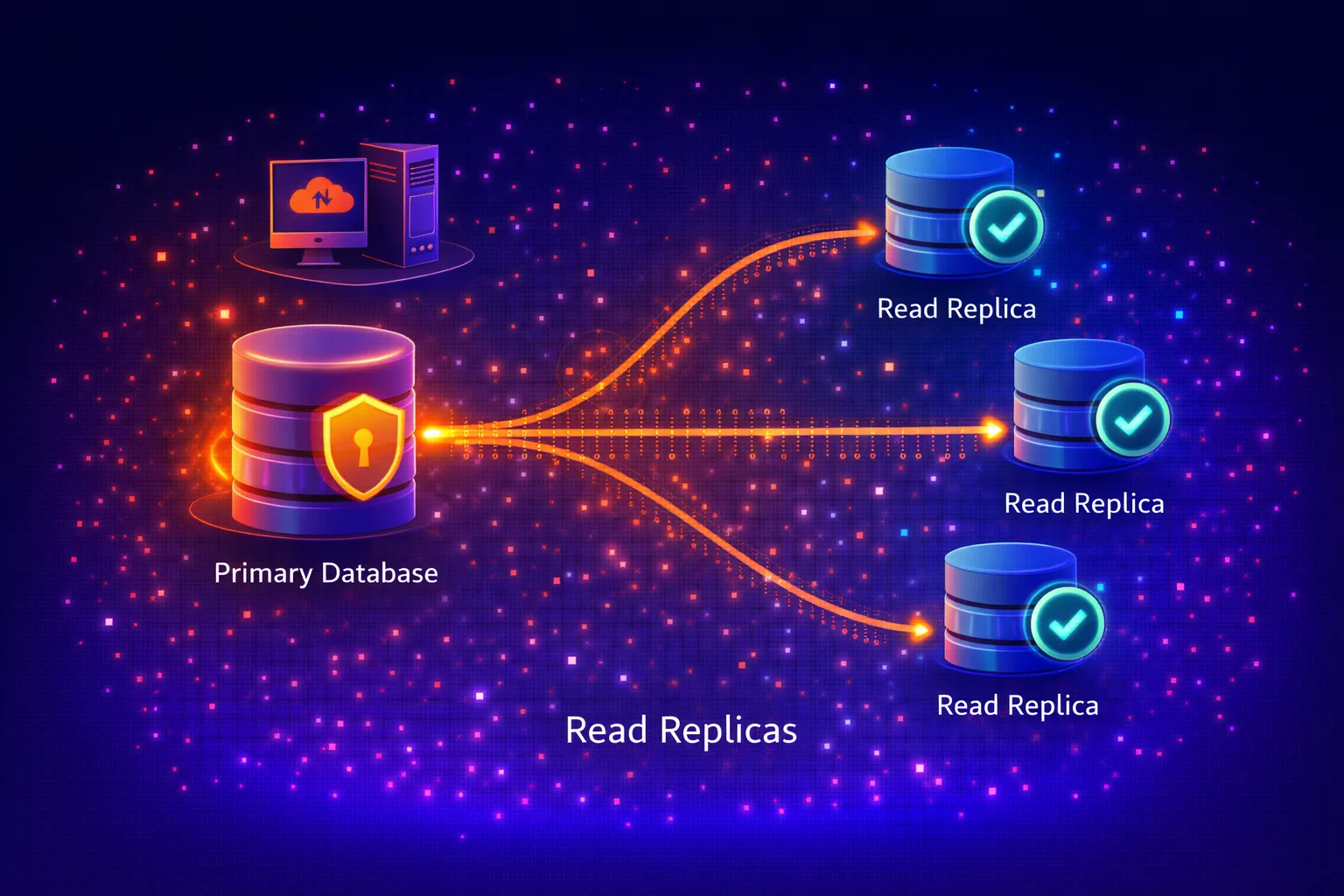
Read Replicas for Database Load Distribution - Master-Slave Replication
When a single database server handles both reads and writes, response times increase and CPU/IO saturate as traffic grows. Read replicas distribute the database load by keeping write operations on the primary (master) while routing read queries to one or more replica servers. Since most web applicat