Blog & Guides
I Want to Create a Website: Where Should I Start?
Learn how to create a website from scratch — from domain registration and hosting selection to CMS setup and going live.
What Is Web Hosting? A Simple 5-Minute Guide
What is web hosting, how does it work, and why does your website need it? Learn the concept in plain language.
What Is the Difference Between Domain and Hosting?
Learn the difference between domain and hosting, how they work together, and which one to get first for your site.
How to Create Your First Website: Step-by-Step Guide
Follow the steps from buying hosting to installing WordPress and going live to create your first website from scratch.
How Much Does It Cost to Create a Website in 2026?
Calculate the real cost of creating a website in 2026 — domain, hosting, theme, and plugin costs broken down with a budget plan.
7 Things to Consider When Choosing a Hosting Provider
Evaluate 7 critical factors including uptime, speed, support, security, and pricing when choosing a hosting provider.
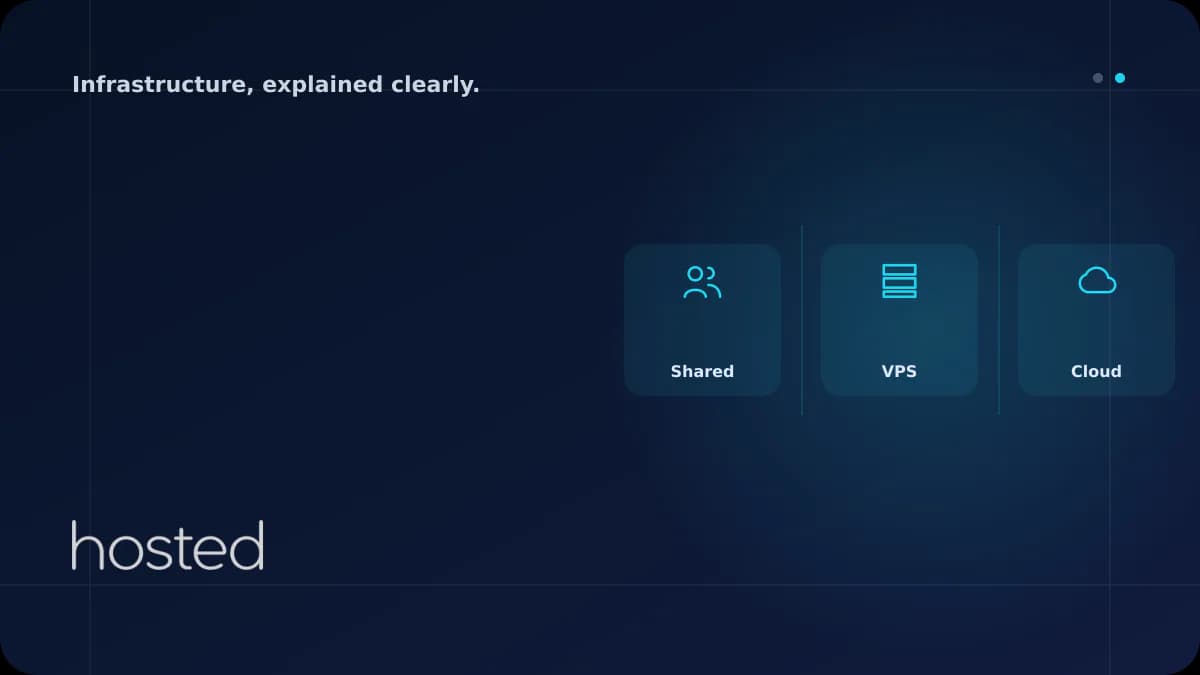
Shared Hosting vs VPS vs Dedicated: Which Is Right for You?
Learn the differences between shared hosting, VPS, and dedicated servers — and when to choose each option.
What Is cPanel and How to Use It? Beginner's Guide
What is cPanel, what are its key features, and how to use it for hosting management? Step-by-step guide.
Why Free Hosting Is Risky for Your Website
Learn about the negative effects of free hosting on SEO, security, and performance — and why you should switch to paid hosting.
How to Choose the Right Domain Name for Your Website
10 practical tips for choosing an SEO-friendly, memorable domain name that fits your brand.
How to Build a Professional Website with WordPress
Learn theme selection, plugin installation, and essential settings to build a professional website with WordPress from scratch.
Speed Up Your WordPress Site in 3 Steps
Is your WordPress site slow? Cut page load times in half with caching, image optimization, and database cleanup.
WordPress Security: Protect Your Site from Hackers
Secure your WordPress site against brute force, SQL injection and malware attacks with these 12 essential security measures.
WordPress Backup Guide: Don't Lose Your Data
Protect your WordPress site with automated backup plugins and manual methods. Full restore steps included.
WordPress SEO Guide: Rank Higher on Google
Boost your WordPress site's Google rankings with technical SEO, content optimization, and plugin configuration — step by step.
WordPress Plugin Guide: 15 Must-Have Plugins for Every Site
Discover the 15 essential WordPress plugins for security, SEO, performance, and backup that every site needs.
Why Is Your WordPress Site Slow? 10 Causes and Fixes
Identify the 10 most common reasons your WordPress site is slow and apply actionable fixes for each.
WordPress Migration: Step-by-Step Guide with Zero Downtime
Migrate your WordPress site to a new host with zero downtime using plugin and manual methods — step by step.
WordPress Cache Plugin Comparison (2026)
Compare LiteSpeed Cache, WP Super Cache, W3 Total Cache, and WP Rocket with performance benchmarks.
Digital Transformation for SMBs: Step by Step from Website to CRM
Build a digital transformation roadmap for your SMB. Integrate website, email marketing, CRM, and automation tools step by step to gain competitive advantage.
Advertising Hosting and Cloud Services with Google Ads: Campaign Guide
Promote your hosting and cloud services with Google Ads. Learn keyword strategy, ad copy writing, and budget optimization with detailed examples.
Content Marketing Strategy: Growing Organic Traffic with a Technical Blog
Grow your organic traffic with technical blog content. Learn content calendar creation, keyword research, and conversion optimization strategies.
Email Marketing Guide: 10 Ways to Increase Your Open Rate
Increase your email marketing campaign open rates. Learn subject line optimization, list segmentation, and send timing tips in detail.
Landing Page Optimization: Ways to Increase Your Conversion Rate
Increase your landing page conversion rate. Learn A/B testing, CTA design, page speed, and trust signals to win more customers in detail.
Pricing Strategies for SaaS Businesses and Hosting Costs
Choose the right pricing model for your SaaS business. Evaluate freemium, tier-based, and usage-based models alongside hosting costs in detail.
Website Analytics Guide: Data-Driven Decisions with Google Analytics 4
Measure your website performance with Google Analytics 4. Learn event tracking, conversion goals, and custom reporting features step by step.
MVP Infrastructure for Startups: Maximum Performance at Minimum Cost
Build cost-effective MVP infrastructure for your startup. Plan hosting selection, database configuration, CDN, and scaling strategies according to your budget.
KVKK and GDPR Compliant Website: Technical Requirements Guide
Make your website KVKK and GDPR compliant. Learn cookie management, data processing policies, and technical infrastructure requirements step by step.
A/B Testing in Digital Marketing: Website and Campaign Optimization
Improve your website and marketing campaign performance with A/B testing. Explore test design, tool selection, and result analysis guide in detail.
What Is a VPS Server? When Should You Upgrade from Shared Hosting?
Learn what a VPS server is, how it differs from shared hosting, and when to upgrade. Detailed resource comparison and step-by-step migration guide.